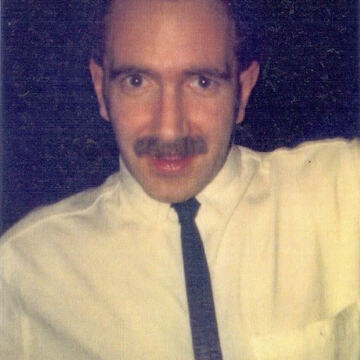
Impact Magazine Cover - January 1997
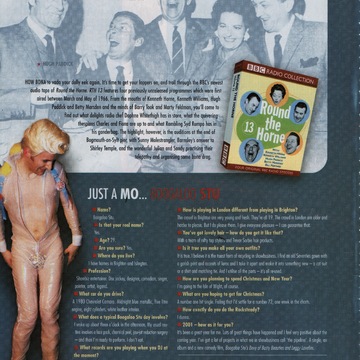
Cover from January ’97 but the photo was taken in 1994. The photographer’s name was Amanda (surname not available). It was taken in her studio (part of her house) in Greenwich. Stu is wearing a knitted twinset of knickers and waistcoat which he made himself.
This looks like an Impact Magazine listings. No idea what year it would be, but it’s around 1995 or 1996 I reckon as we were at the Joint from 1995 onwards and the description of wedding dresses worn with cardigans suggest we were all dressing like Debut-era Bjork.
Free news sheet which details Brighton local HIV healthcare stories and support. Includes sections covering aromatherapy, HIV service forums, medical matters, figures regarding HIV, positive news stories.
Snippet from an interview with Elle Kennedy. The full interview was part of Queer in Brighton oral history project. A collection of over 100 recordings, documenting queer life in Brighton.
Elle discusses the politics of "passing" and how it informs dating as a trans person, she also talks about life in Brighton, community organisations and social events, and pronouns and labels.
Elle Kennedy is interviewed by Ten Harber. She speaks about coming to Brighton for university in 2010 and choosing it as a place to transition. She speaks about nightclubs such as Legends, The Queens Arms and Revenge, and the issue of unisex toilets in club spaces. She speaks further about passing and dating as a transwoman, including the challenges of being translesbian in women’s spaces.
Elle also talks about straight people attending Pride and how it brings a higher security risk. The Clare Project is mentioned as a space to meet and speak to other trans women, also noting The Marlborough and The Zone as trans-friendly spaces. Though self-identifying as right of Labour, she does support Caroline Lucas and the Green party in Brighton.
Brighton is mentioned as a place that introduced Elle to gender beyond the binary, now regarding the term queer as a ‘conciousness’ rather than as a sexual preference.
Elle speaks about transitioning and how Brighton uniquely helped with that.
An interview with the extraordinary collector of ordinary queer lives, James Gardiner, explaining how he discovered the Betty & Tommy collection; photography, handwritten notes, cameras which offer a touching insight into a 50 year lesbian relationship - currently displayed as part of Queer The Pier at Brighton Museums
.
Editing and captioning by Rosie Powell Freelance
Supported by National Lottery Heritage Fund
This snippet is part of a longer interview James Ledward gave to Queer In Brighton oral history project. Recorded on 27 April 2013
In this snippet James Ledward describes the origins of G-Scene Magazine, early forms of community fundraising and organising, and the relationship of the community with local newspaper The Argus.
Snippet from an interview with Jenny Bennett. The full interview was part of Queer In Brighton oral history project. A collection of over 100 recordings, documenting queer life in Brighton.
Jenny recalls her experience of volunteering for Switchboard at the time when it was Gay, then Lesbian and Gay switchboard. She describes what the service was there for and what worried people most.
"Interview with John Rosewarn for Queer in Brighton Oral History Project (28 May 2013), interviewed by ??.
Oral history interview collected as part of the Queer in Brighton project 2013-2014. Life history from Taunton to Brighton DOB 1944 circa - leaves home at 18 (gets thrown out by father after being caught in bed with dad’s best mate) goes to London -sex worker from 18 to 24 years of age 1961 to 1967 - moves to Brighton 1969. Trains as a nurse - lives in Brighton- work students in Hayward’s Heath. Moves to Spain from 1991-1999. Talks about sex work, cottaging and it’s demise in the early 1980s, celebrities, work as a nurse, homophobia, bars in Brighton, his relationship with older man - open relationship- promiscuity, first Pride, estrangement from parents, drag persona. "
Lucy Foster is interviewed by Ten Harber (04/02/2013). Lucy came to Brighton from Surrey in 2008 to study humanities at Brighton University. She has yet to truly discover the gay scene and has been out for 2 years. She recalls how she felt after coming out and how her friends and family reacted. She says she is still coming to grips with her sexuality and mentions her fears of getting involved with the queer community but that she also has a desire to do so. She speaks about how visiting Stonewall affected her coming out experience.
She notes how there is a sensitivity of language in Brighton that doesn’t exist in her hometown.
Interview with Ludo Foster for Queer in Brighton Oral History Project 2012-2014 (12 Dec. 2012), interviewed by Heather.
Short Q&A with Ludo Foster about identity, origin, labels and social spheres. Interview with gender-fluid, , reflecting on identity, spaces. Ludo speaks about gender identity, gender fluidity and of being a transmasculine person of colour living in Brighton in 2010s.
Discussion about reasons for relocating to Brighton, impressions before and after moving, day/nightlife in Brighton and academic life at University of Sussex.
Discussion about gender expression, gendered assumptions, being transmasculine and transitioning at work and with family.
Discussion about the bureaucracy of transition, trans rites of passage and milestones, and changes to which queer & straight spaces are welcoming or unwelcoming when coming out as transmasculine, ties between lesbian and FTM communities.
Discussion about challenges of dating like pubs/clubs, gender identity, how potential partners perceive you, the safety and separation/privacy of the internet, online dating not being designed for trans people.
Original audio (in two parts), transcript and consent form included.
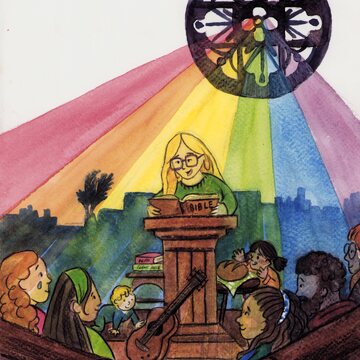
Snippet from an interview with Rachel Beck. The full interview was part of Queer In Brighton oral history project. A collection of over 100 recordings, documenting queer life in Brighton.
In this interview Rachel describes retaliation against Central Free Church in Brighton that was firebombed due to allowing gay people to meet on the premises.
This snippet is part of a longer interview Roger Nicholls gave to Queer In Brighton oral history project.
Roger describes his experiences as a teacher, and as an activist during the Section 28 era.