Stitching Across Borders: A textile project call-out for QTIBPOC and/or migrants
13th October 2026
What stories of queer people of colour and migration do we carry with us? What possibilities emerge when we bring them together through textile-making?
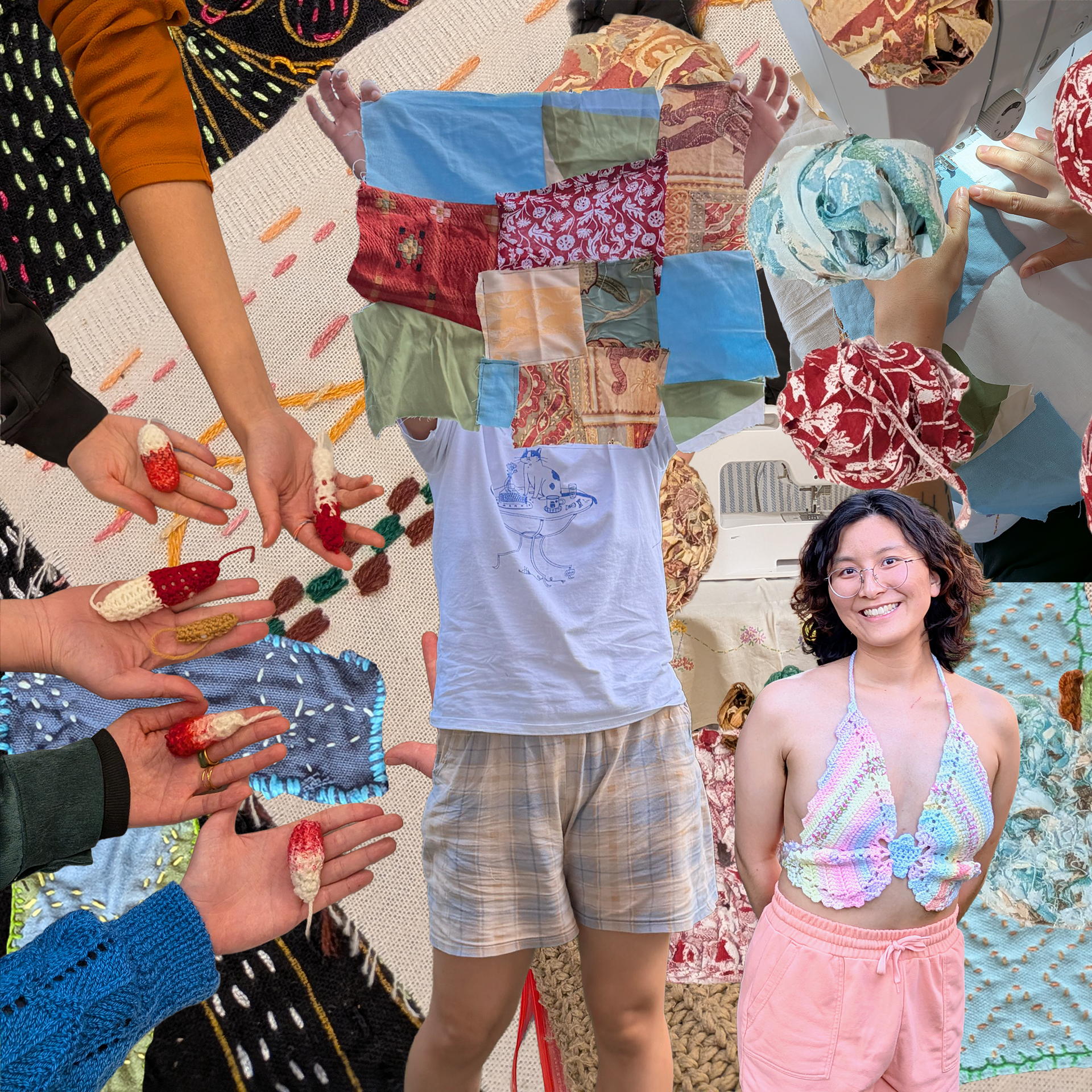
Join us to create a collective textile artwork exploring themes of queer people of colour and themes of migration, led by textile artist Siqing Zhan. Together, we will reflect on the fluidity of our experiences and identities.
As migrants, we move across different borders. As queer people of colour, we move across genders, sexualities and intimate relationships, while many members of our community also have personal or family experiences of migration. Through a shared textile work, this project aims to reflect on the complex emotional and lived experiences that come with this movement, including struggle, frustration and hardship, as well as new possibilities. Moving between different worlds can offer richer, more intersectional and transnational perspectives, and opportunities to imagine and create alternative futures. Bringing these stories together through a shared textile work offers a meaningful way to reflect on these interconnected experiences.
Textile-making has a long history of bringing people together, creating spaces for conversation, care and collective making. As queer people of colour and migration, textiles are a powerful medium for us, whether it is a quilt or banner we make and hold together at protests and Pride, or a collective textile-making activity that creates a safe, warm and inclusive space for our community.
The Queer Heritage South archive holds a rich textile collection. We can find the UK AIDS Memorial Quilt, which has been exhibited in Brighton many times since 1993. Over more than three decades, it has continued to touch, empower and bring people together. One of the panels from the National AIDS Memorial Quilt was made by queer activist Arthur Law in 1991. There are 133 stars depicted on the panel, each representing a life lost to AIDS in Brighton. In 2021, Harry Hillery joined a workshop at Acorn House in London, where the UK AIDS Memorial Quilt was being displayed, and made a mini quilt for this collection. As part of the 2012 Brighton & Hove Pride march, Moxom and McHale put out a call for people to sew a name onto a hankie, which was then sewn onto a larger panel by Robin Thompson.

The AIDS Memorial Quilt 'Brighton Remembers' Exhibition at the Corn Exchange 1993

Arthur Law's star quilt

Brighton AIDS Memorial mini quilt made by Harry Hillery

The Hankie Quilt
At the same time, we have also found that the representation of queer people of colour and people with experiences of migration within these textile collections is really limited. Stories of queer people of colour and migration are still quite invisible within mainstream queer narratives.
This is why we are here. These sessions will offer opportunities to share stories, build relationships and strengthen connections within the community — recording our stories for us, by us and with us.
Who can take part?
The project will prioritise queer people of colour and people with migration experience, including those who have migrated to the UK from other countries or relocated to Brighton & Hove from elsewhere in the UK. Other people are also welcome to join the sessions, but the project will focus on the experiences of queer people of colour, experiences of migration, and the intersectionality of these experiences.
How to take part
Between October 2026 and July 2027, we will have eight sessions at Brighton Museum. Participants are welcome to drop in to as many sessions as they are able to attend. Each participant will contribute a small textile piece, completed during the sessions or in their own time. These individual pieces will then be stitched together into a larger collective artwork, which will be shown at Brighton Museum in a new exhibition in 2027 to mark the 60th anniversary of the partial decriminalisation of homosexuality in the UK, and will be displayed for five years. Booking is now open for these sessions, more information can be found here.
The project will prioritise the use of upcycled materials, especially fabrics that carry personal stories of migration and queer people of colour. These might include old items of clothing, tote bags, tablecloths, bed linen or anything else that holds personal significance.
Participants will also be invited to share the story behind their contribution. These stories can be written or recorded and edited into a digital zine or audio piece, creating a lasting record of the collective making process and the diverse experiences represented within the work.